

























The artificial neural network prediction tool
For data regression and prediction, Visual Gene Developer includes an artificial neural network toolbox. You can easily load data sets to spreadsheet windows and then correlate input parameters to output variables (=regression or learning) on the main configuration window. Because the software provides a specialized class whose name is 'NeuralNet', users can directly access to the class to make use of neural network prediction toolbox when they develop new modules. A user can use maximum 5 instances of NeuralNet including 'NeuralNet', 'NeuralNet2', 'NeuralNet3', 'NeuralNet4', and 'NeuralNet5'.
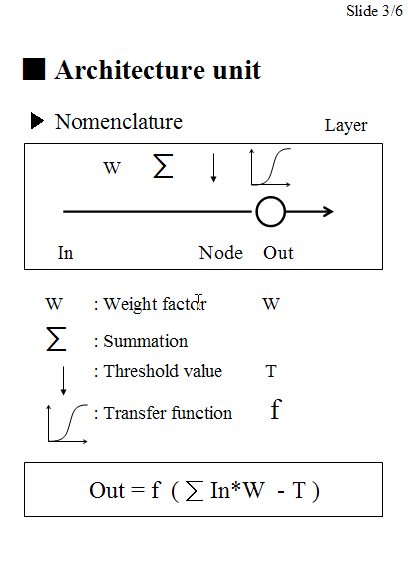
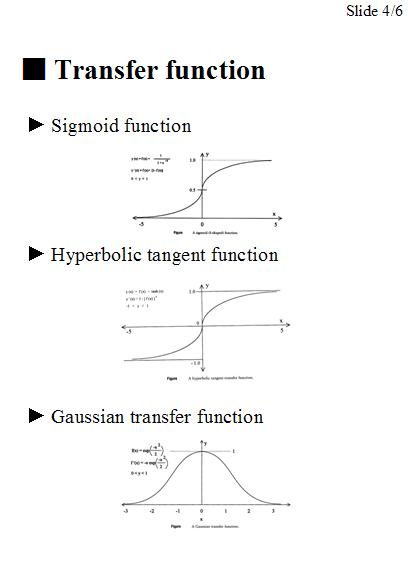
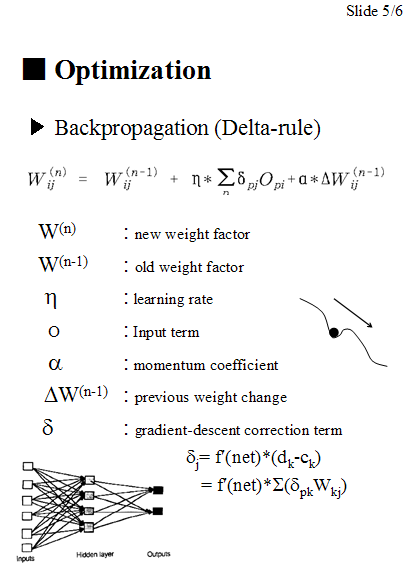
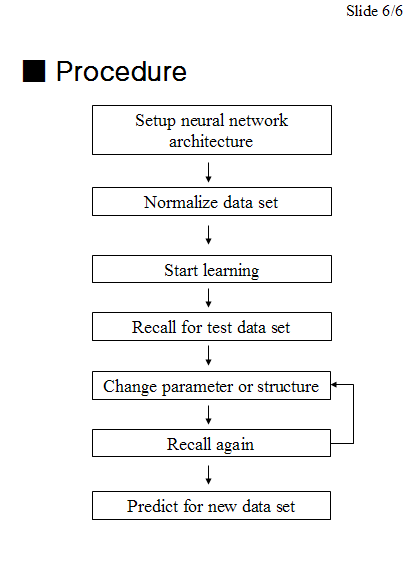
We used a typical feed-forward neural network with a standard backpropagation learning algorithm to train networks and provides several different transfer functions. Without using gene design or optimization, our neural network package works perfectly independently even though all menus are still in the software environment. In this section, we shortly describe the artificial neural networks and then demonstrate how to use neural network toolbox and the class.
New update: if you are a programmer and want to use trained neural network files in your own programs, check NeuralNet.java.
Visual Gene Developer is a free software for artificial neural network prediction for general purposes!!!
Check built-in analysis tools: data normalization, pattern analysis, network map analysis, regression analysis, programming function
o Artificial neural network
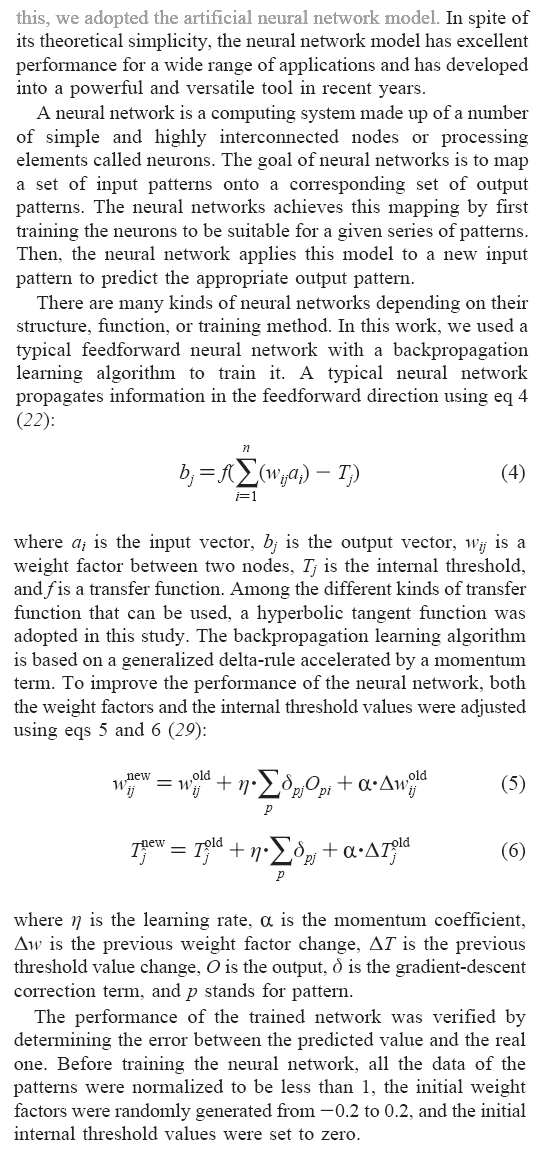
From Sang-Kyu Jung & Sun Bok Lee, Biotechnology Progress, 2006.
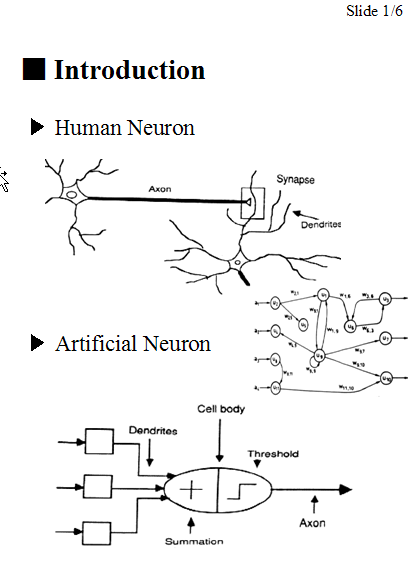
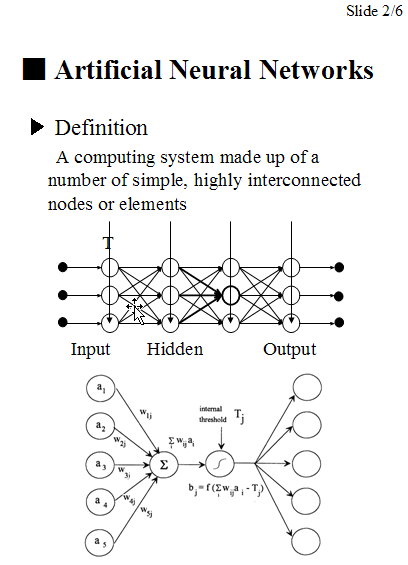
Simple slides here.
o How to use artificial neural network toolbox
Step 1: Prepare data set
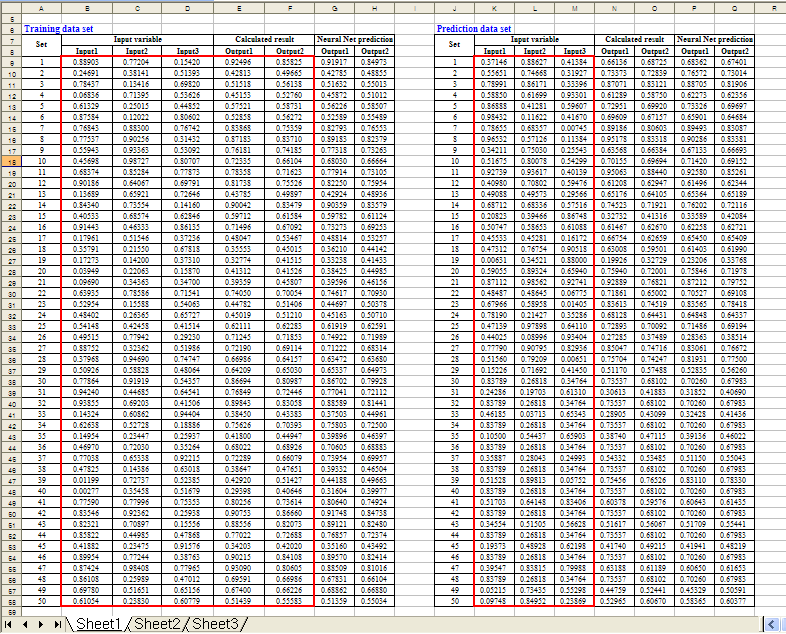
Here is a simple example. Using Microsoft Excel, the following table was generated. Click here to download 'Sample SinCos.xls'
In the 'Equation', 'Calculated Output1' and 'Calculated Output2' were divided by 2 or 3 to normalize data. Keep in mind that all data values should be less than 1 and must be normalized if they are bigger than 1. If the numbers are higher than 1 it may mean that they are out of range for the neural network prediction.
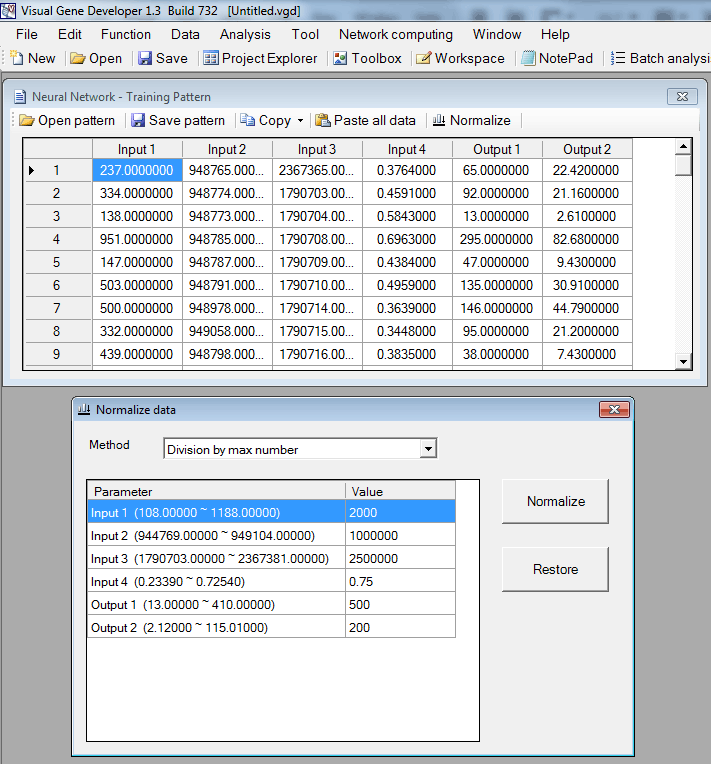
New update! A new function for data normalization has been implemented!
| Equation |
Input1=Rand()
'random number between 0 and 1 Input2=Rand() 'random number between 0 and 1 Input3=Rand() 'random number between 0 and 1 Calculated Output1=(Input1+Input2^Input3)/2 Calculated Output2=(Input1+Sin(Input2)+Cos(Input3))/3 |
||||||
Step 2: Configure a neural network
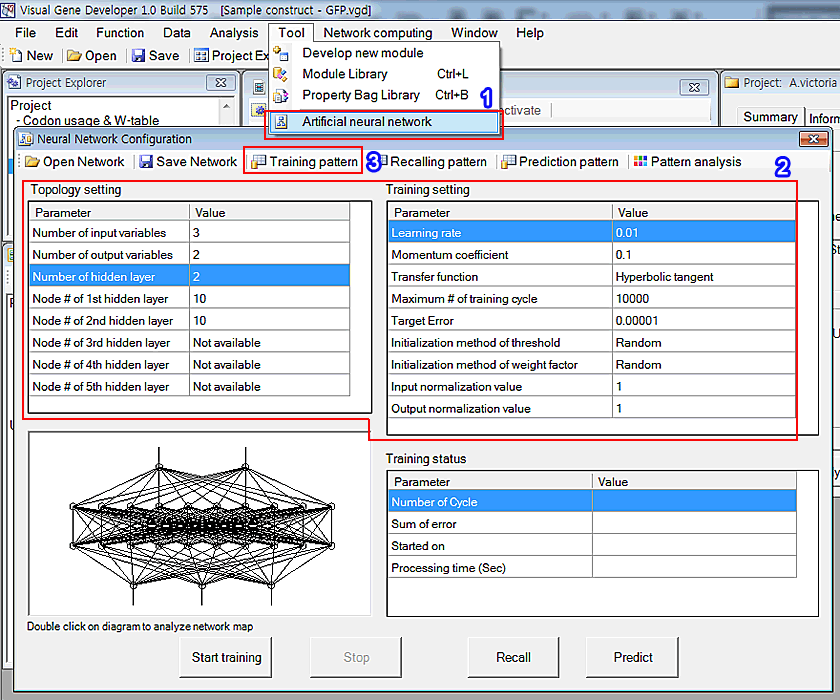
1. Click the 'Artificial neural network' in the 'Tool' menu
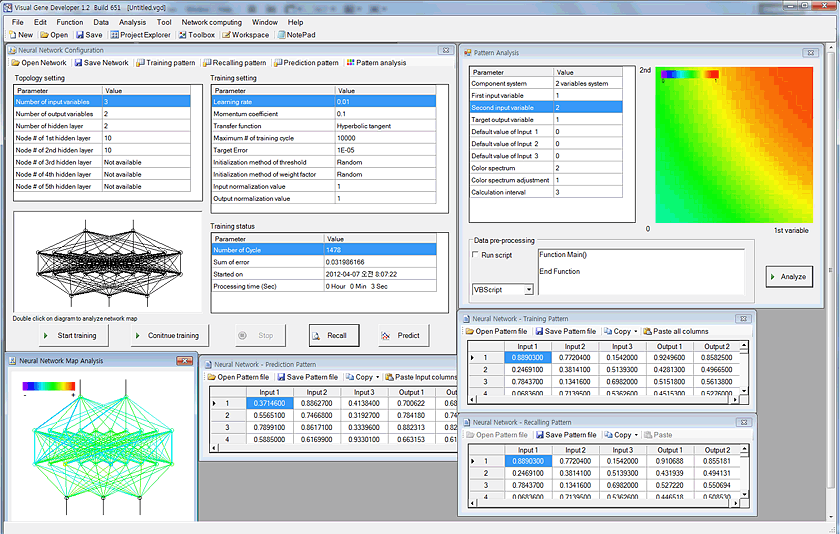
2. You can see the window titled 'Neural Network Configuration'. Adjust parameters as shown in the 'Topology setting' and 'Training setting'
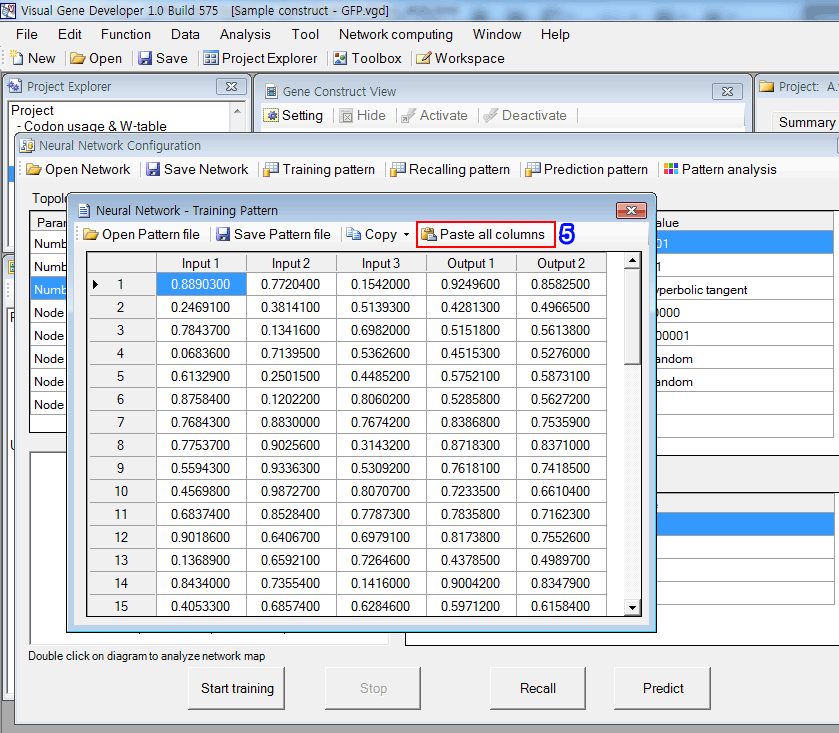
3. First, click on the 'Training pattern' button in order to set up the training data set. Immediately, you can see a new pop-up window. But it doesn't include any data initially.
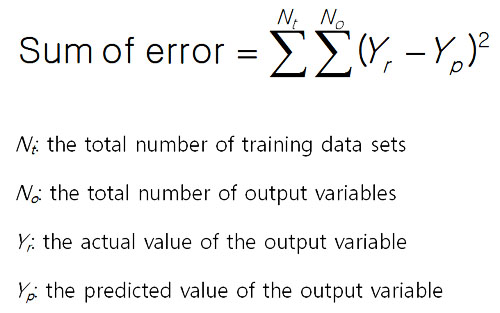
The sum of error is defined by the following equation.
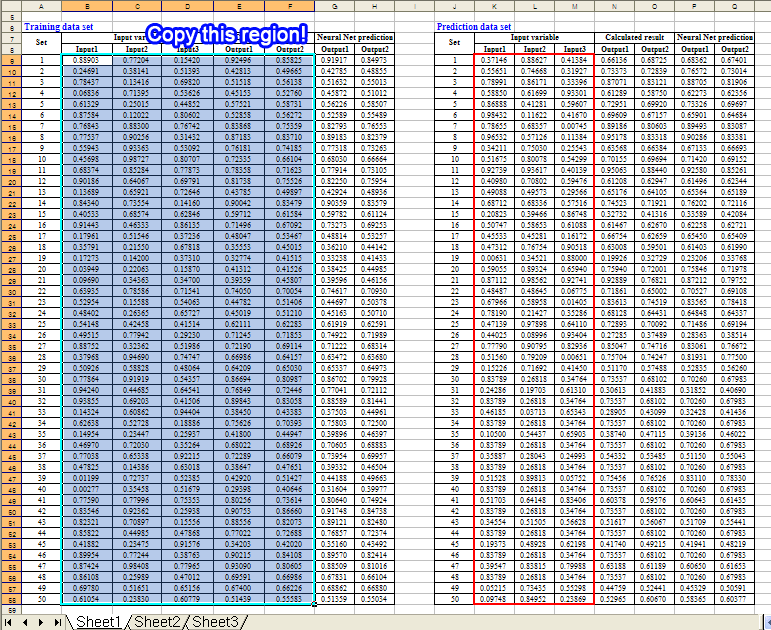
4. Copy the following region of the training data set in the Excel document
5. Click on the 'Paste all columns' button in the 'Neural Network - Training Pattern' window. It retrieves text data from the clipboard and pastes it to the table as shown in the figure.
Step 3: Start learning process (=data regression)
1. Click on the 'Start training' button. It took about 70 seconds to repeats 30,000 cycles.
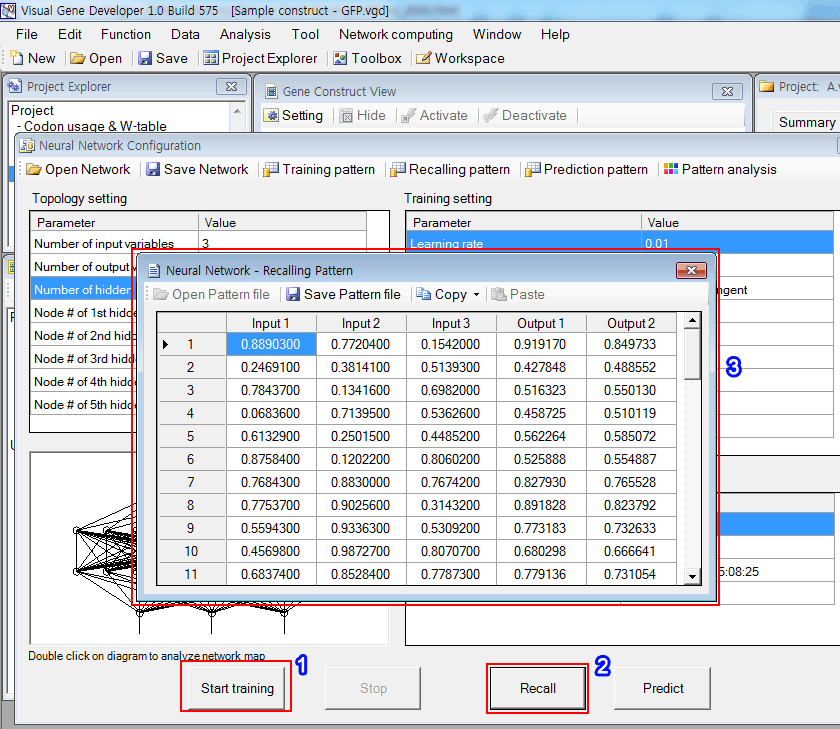
2. Click on the 'Recall' button.
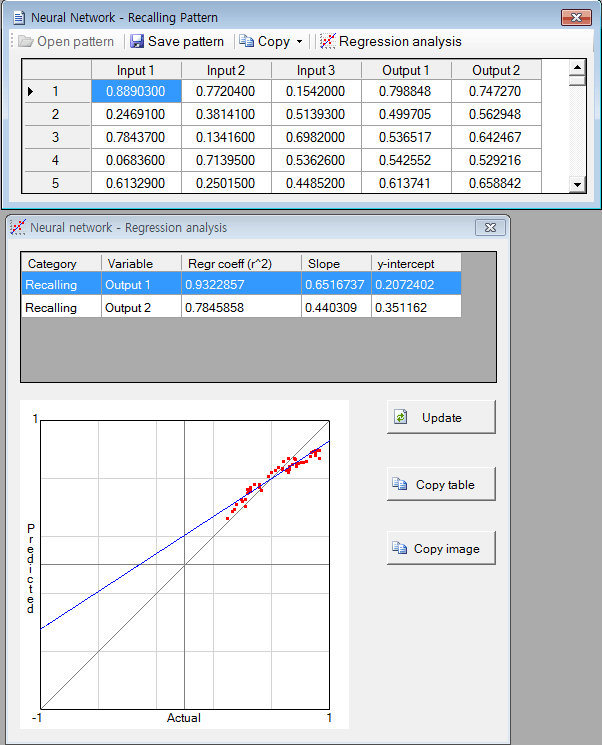
3. The software filled the empty columns (Outpu1 and Output2) with numbers and you can check the predicted values. The 'Copy' button is available.
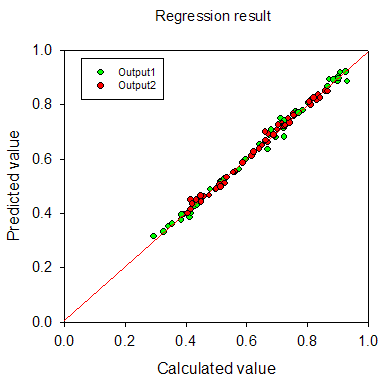
4. The regression result is shown in the below figure. It looks quite good.
Step 4: Predict new data set
1. Copy the following region of the training data set in the Excel document.
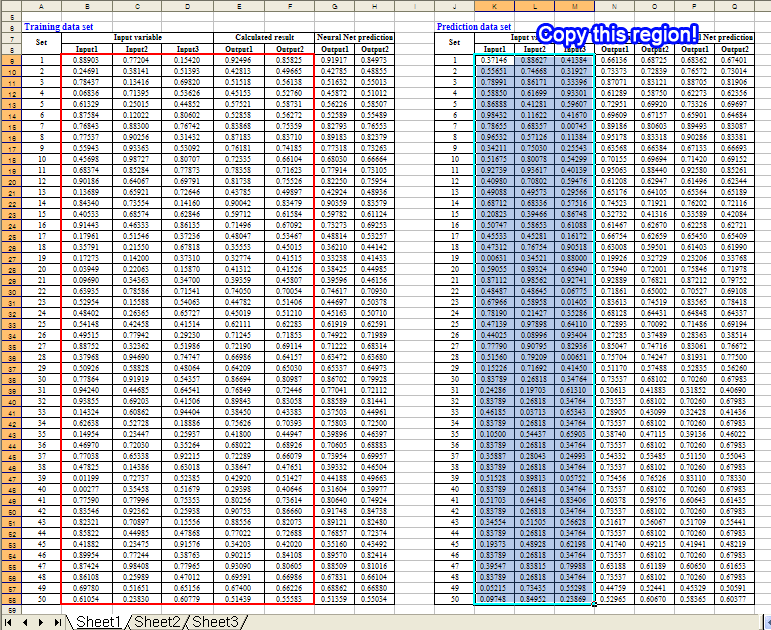
2. Click on the 'Prediction pattern' button in the 'Neural Network Configuration' window
3. Click on the 'Paste Input columns' button to paste data of clipboard to the table
4. Click on the 'Predict' button. It will complete the table as shown in the figure. You can check the predicted values.
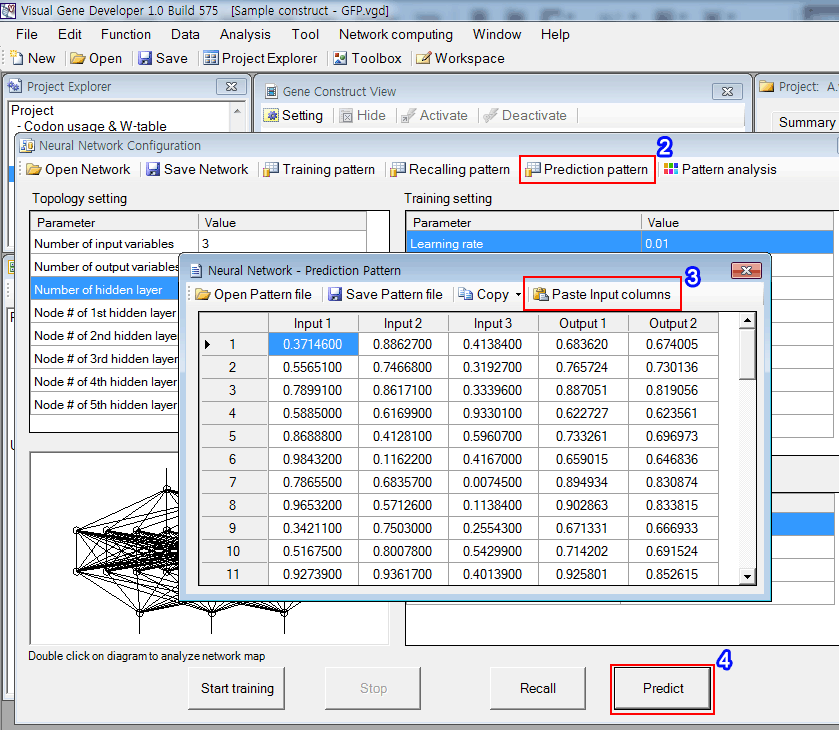
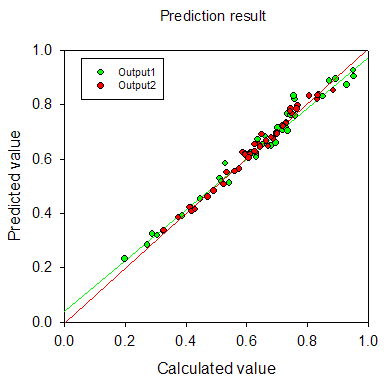
5. The result is shown in the figure. It really works well.
New!! Watch YouTube video tutorial
- Click on the 'Normalize' button to show the pop-up window.
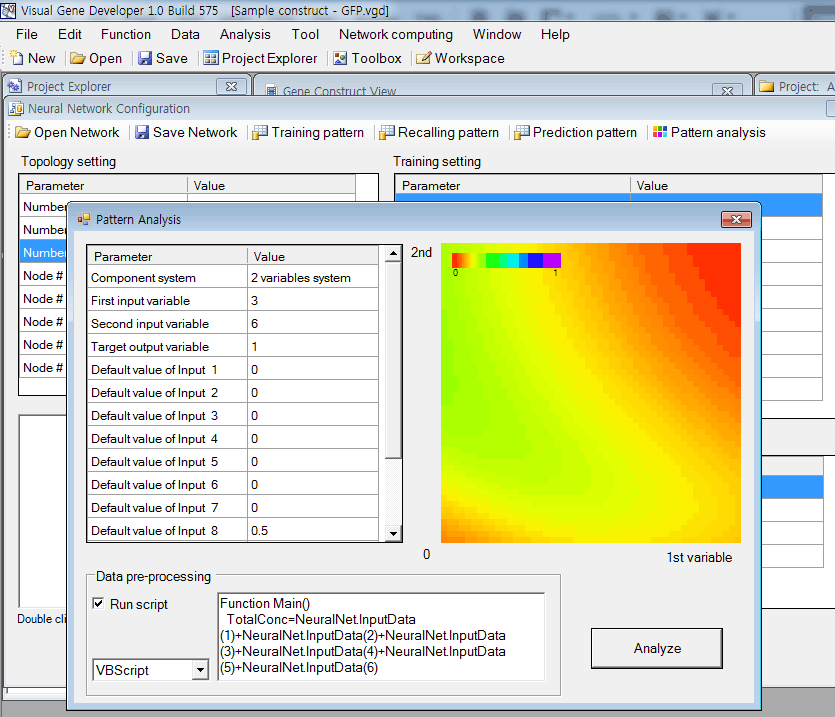
In the case of multiple input variable systems, Visual Gene Developer provides a useful function to test 2 or 3 input variables as a nice plot.
2-D plot for two-variable system
Ternary plot for three input variable system
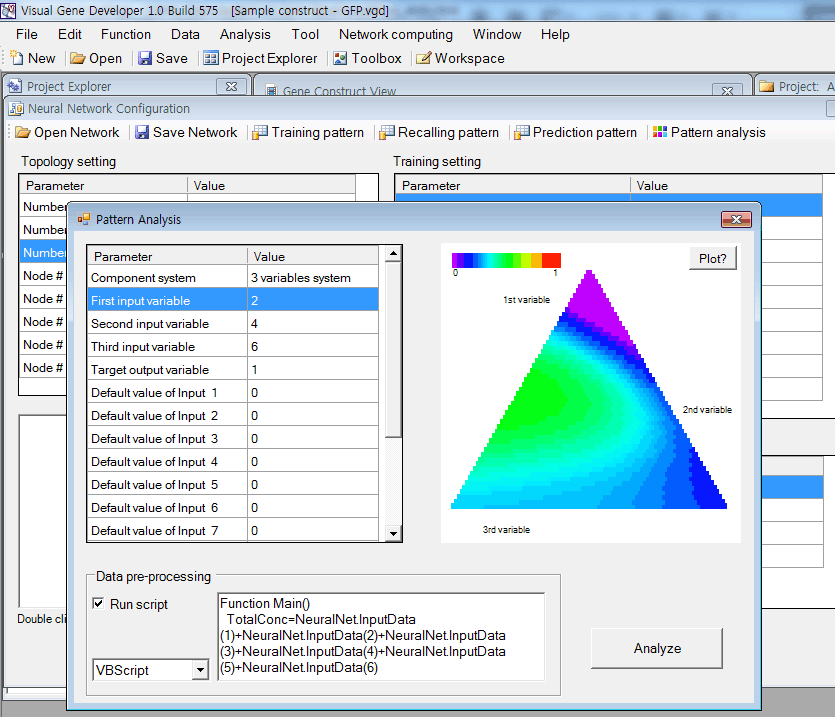
'Data pre-processing' is performed if 'Run script' is checked.
Internally, Visual Gene Developer assigns initial values of all input variables and then executes the script code written in 'Data pre-processing'.
This function is useful when a certain input variable depends on other variables. For example, input 3 is the sum of input 1 and input 2.
To adjust the value of input 3, you can write code like,
|
Function Main() |
Visual Gene Developer provides a graphical visualization of a trained network for a user. You can check the color and width of a line or circle.
Lines represent weight factors and circles (node) mean threshold values.
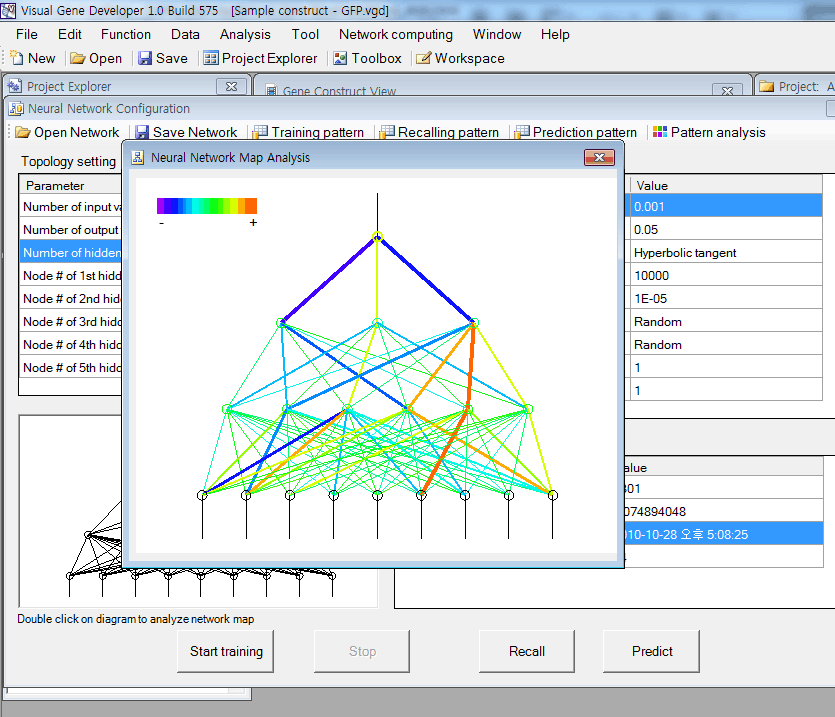
Just double-click on a diagram in the 'Neural Network Configuration' window.
In the diagram, the red color corresponds to a high positive number and violet color means a high negative number. Line width is proportional to the absolute number of weight factor or threshold value.
o Regression analysis New update!
o More information about Neural network data format
You can save the data set table as a standard comma delimited text file. Our neural network (trained) data file is also easily accessible because it has a standard text file format. You can open sample files and check the content.
o How to use 'NeuralNet' class
Although Visual Gene Developer has a user-friendly neural network toolbox, a user may prefer using the 'NeuralNet' class to make customized analysis module. A user can use maximum 5 instances of NeuralNet including 'NeuralNet', 'NeuralNet2', 'NeuralNet3', 'NeuralNet4', and 'NeuralNet5'.
Example
1. Click on the 'Module Library' in the 'Tool' menu
2. Choose the 'Sample NeuralNet' item in the 'Module Library' window
3. Click on the 'Edit Module' button in the 'Module Library' window
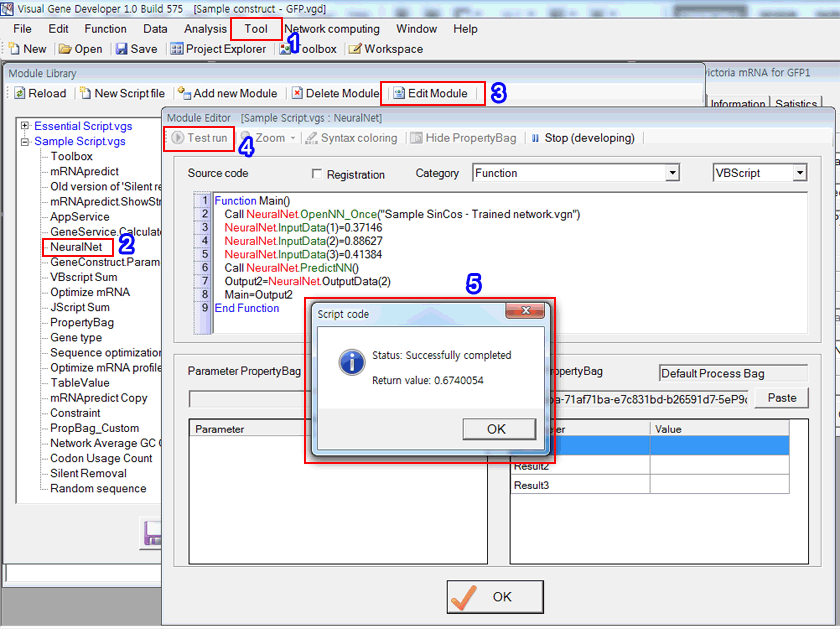
4. Click on the 'Test run' button in the 'Module Editor' window. Check source code and explanation!
Source code
VBScript
Mallu Aunty Shakeela Big Boob Pressing - On Tube8com [updated] Free
Malayalam cinema, often called Mollywood, is widely celebrated for its , social themes , and technical finesse . It is deeply intertwined with Kerala's culture, reflecting the region's linguistic pride, social structures, and evolving modern identity. Key Cultural Pillars in Malayalam Cinema
The turn of the 2010s sparked a massive creative renaissance, often termed the "New Gen" wave.
Malayalam cinema, also known as Mollywood, is a thriving film industry based in Kerala, India. With a rich cultural heritage and a unique blend of traditional and modern influences, Malayalam cinema has gained a significant following not only in India but also globally. This guide aims to provide an overview of Malayalam cinema and culture, exploring its history, notable filmmakers, popular genres, and cultural significance. mallu aunty shakeela big boob pressing on tube8com free
If you would like to expand this article further, let me know if you want to focus on , a deeper analysis of gender politics in Mollywood , or a list of must-watch classic films . Share public link
Kerala’s position as India’s most literate state creates an audience that demands logical consistency and intellectual depth. Screenwriters cannot rely on lazy plot devices. Instead, films feature complex character arcs, philosophical dilemmas, and subtextual commentary that assume a highly perceptive viewer. Political Consciousness Malayalam cinema, also known as Mollywood, is a
In 1965, Ramu Kariat directed Chemmeen , an adaptation of Thakazhi Sivasankara Pillai’s tragic novel. The film won the National Film Award for Best Feature Film, proving that regional coastal folklore and literary adaptations could achieve commercial and critical success on a massive scale. 2. Literary Intersections and the Parallel Cinema Movement
At the heart of Malayalam cinema is its deep-seated connection to Kerala’s progressive social movements. The state’s history of land reforms, high literacy rates, and political consciousness is vividly captured in its films. Throughout the 70s and 80s, the "Middle Cinema" movement, led by auteurs like Aravindan, Adoor Gopalakrishnan, and Padmarajan, bridged the gap between commercial viability and artistic expression. These films explored the nuances of the middle-class psyche, the breakdown of the joint family system, and the existential crises of the youth, all while avoiding the tropes of melodrama. If you would like to expand this article
The first Malayalam film, the silent movie Vigathakumaran (The Lost Child, 1928), was the ambitious project of J.C. Daniel, a dentist with a passion for cinema. Unlike many of its contemporaries in India that leaned heavily on mythological tales, this film boldly focused on a social theme of child abduction. However, its progressive outlook proved too much for the conservative society of the time. The film featured P.K. Rosy, a Dalit woman, in the role of an upper-caste Nair heroine. The backlash was immediate and vicious: upper-caste audiences rejected the film, forcing Rosy to flee the region and effectively ending her career. The devastating public and financial failure left J.C. Daniel bankrupt, and no print of Vigathakumaran is known to survive.
The rise of global streaming platforms like Netflix, Amazon Prime, and SonyLIV during the pandemic introduced Malayalam cinema to a global audience. Subtitled films like The Great Indian Kitchen (a scathing critique of patriarchal domestic labor) and Jallikattu (a visceral exploration of human primal instincts) found passionate fanbases far beyond the borders of Kerala. 6. Challenges and Evolving Perspectives
In the 2010s, Malayalam cinema underwent a massive structural and aesthetic revolution, often termed the "New Generation" wave. This era shifted away from the aging superstars to embrace hyper-local, slice-of-life storytelling. Hyper-Local Realism
5. The 'Return message' shows a result. It's the same value as shown in the previous prediction date table.
