
.jpg)
.jpg)
.jpg)
.jpg)
.jpg)
The footage—which later served as the basis for the 2000 documentary by Sami Martin Saif, The Video Diary of Ricardo Lopez —reveals a profoundly disturbed young man. In the videos, López can be seen rehearsing what he would say, pacing around his cluttered apartment, and discussing his feelings of inadequacy, his hatred for his job, and his frustration with society. He openly admitted that he expected to be arrested after his plot was complete, but expressed that he did not care about the consequences. The Acid Bomb
Start by discussing mental health challenges and the importance of seeking help. Emphasize that suicide is a serious issue and that there are support options. Include hotlines or websites for assistance. Also, mention the impact of media on public perception and the responsibility in discussing such topics. Avoid any details that could glorify or encourage harmful behavior. Make the focus on support and understanding. Maybe add a disclaimer that the topic is sensitive and the post is meant to promote awareness, not to share the content. Need to keep it positive and constructive. Let me structure this step by step: introduction about the sensitivity of the topic, mental health resources, responsible media practices, and a conclusion reinforcing the main message. Make sure the tone is empathetic and not sensational. Avoid any clickbait language. Check if there are any specific organizations that support suicide prevention that should be mentioned. Also, verify that the resources provided are appropriate and up-to-date. Alright, that should cover it without compromising guidelines. Let me put that into a coherent response.
In January 1996, López bought a video camera and began documenting his daily life, thoughts, and plans. These tapes were intended to serve as his final testament and an "exclusive" explanation of his actions, to be viewed by the world after his death.
In conclusion, the "Ricardo Lopez suicide video exclusive" is more than a morbid curiosity; it's a window into a tragedy that could have been prevented. It serves as a call to action for society to prioritize mental health, to recognize the signs of distress, and to foster an environment where individuals feel safe seeking help. Through awareness and education, we can hope to prevent such tragedies from occurring in the future.
The Digital Ghost of Ricardo López: The Tragic Intersection of Stalking, Mental Illness, and the Dawn of the Internet
Consider the source: Why did López make the video? He wanted notoriety. He wanted his "message" to be seen. By watching, are you giving him exactly what he wanted? The film's content is not an exposé; it is the recorded final act of a deeply disturbed individual who intended to murder another person.
What makes the Lopez tapes uniquely disturbing is not just their content, but their context. We live in an age of curated social media, where the most intimate moments of our lives are filtered, edited, and presented for maximum appeal. Ricardo Lopez’s tapes are the absolute antithesis of this. They are raw, unedited, and shockingly candid. Michael English, who wrote a master’s thesis on the ethical implications of the tapes, notes that the footage allows viewers to witness the mental deterioration of a sick individual in real-time, a descent that feels both alien and uncomfortably relatable.
The Ricardo Lopez case serves as a tragic reminder of the devastating consequences of untreated mental health issues and the dangers of online harassment. By sharing his story and highlighting the importance of support and resources, we hope to create a safer and more compassionate online community.
López spent months constructing a sophisticated booby-trapped book designed to spray sulfuric acid when opened. On September 12, 1996, he mailed the package to Björk’s London residence. He then returned home to film his final video diary. The Video Diaries: Inside the Tapes
The final tape, recorded on September 12, captures Lopez painting his face red and black, placing a sign behind him that read "The Best of Me," and ending his own life while Björk's music played in the background. The Discovery and the Digital Afterlife
.jpg)
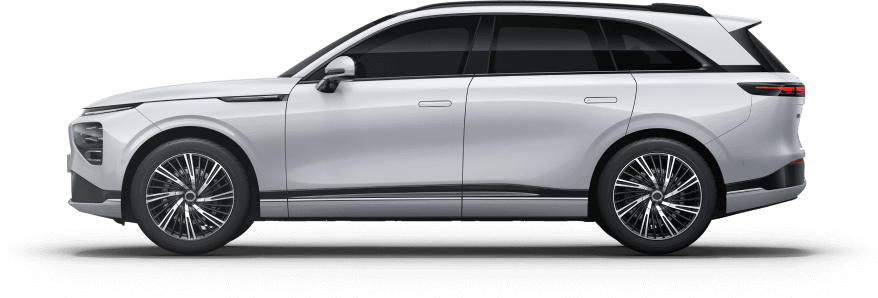
The BYD Xia DM-i 2025 adopts a design language similar to the Denza D9, featuring a full and wide front end with a "large-mouth" grille. The grille is adorned with numerous intermittent chrome trim pieces, resembling "fangs," which create a strong visual impact. The dragon-claw-shaped headlights on both sides are connected by a silver chrome trim panel, further enhancing the visual tension of the front face. A full-width LED light strip adds a strong sense of modern technology, while large triangular air intakes on both sides of the lower bumper contribute a sporty vibe.
The dimensions of the BYD Xia DM-i 2025 are 5145/1970/1805mm (length/width/height), with a wheelbase of 3045mm, making it slightly smaller than the Denza D9. Its imposing body, combined with a boxy silhouette and sculpted waistline, exudes a commanding presence. Chrome trim along the upper edge of the windows, along with electric sliding doors and 18-inch multi-spoke wheels, highlights its premium attributes. The model also features AR projection sensing technology, enabling the side sliding door or tailgate to open via a ground projection light when stepped on, delivering an elevated sense of ceremony. The signature "Chinese Knot" full-width taillights are also present, paired with the "BYD" logo to balance technological sophistication with brand recognition.
.jpg)

| Parameters | BYD Xia DM-i 2025 100KM Leading Model | BYD Xia DM-i 2025 100KM Surpassing Model | BYD Xia DM-i 2025 180KM Surpassing Model | BYD Xia DM-i 2025 180KM Excellence Model |
| FOB Price ($) | $34862 | $36206 | $39701 | $42926 |
| Level | Medium and large MPV | Medium and large MPV | Medium and large MPV | Medium and large MPV |
| Energy type | Plug-in hybrid | Plug-in hybrid | Plug-in hybrid | Plug-in hybrid |
| Release Date | 2025.01 | 2025.01 | 2025.01 | 2025.01 |
| Motor | 1.5T 156 hp L4 plug-in hybrid | 1.5T 156 hp L4 plug-in hybrid | 1.5T 156 hp L4 plug-in hybrid | 1.5T 156 hp L4 plug-in hybrid |
| Pure electric range (km)CLTC | 100 | 100 | 180 | 180 |
| Maximum engine power (kW) | 115(156Ps) | 115(156Ps) | 115(156Ps) | 115(156Ps) |
| Maximum motor power (kW) | 200(272Ps) | 200(272Ps) | 200(272Ps) | 200(272Ps) |
| Maximum engine torque (Nm) | 225 | 225 | 225 | 225 |
| Maximum motor torque (Nm) | 315 | 315 | 315 | 315 |
| Transmission | E-CVT continuously variable transmission | E-CVT continuously variable transmission | E-CVT continuously variable transmission | E-CVT continuously variable transmission |
| Length (mm) x Width (mm) x Height (mm) | 5145x1970x1805 | 5145x1970x1805 | 5145x1970x1805 | 5145x1970x1805 |
| Body structure | 5-door 7-seater MPV | 5-door 7-seater MPV | 5-door 7-seater MPV | 5-door 7-seater MPV |
| Max. speed (km/h) | 190 | 190 | 190 | 190 |
| Wheelbase (mm) | 3045 | 3045 | 3045 | 3045 |
| Curb Weight (kg) | 2470 | 2470 | 2650 | 2650 |
| Battery type | Lithium iron phosphate battery | Lithium iron phosphate battery | Lithium iron phosphate battery | Lithium iron phosphate battery |
| Battery capacity (kWh) | 20.39 | 20.39 | 36.6 | 36.6 |
| charging method | Fast charge 0.3 hours Slow charge 2.9 hours | Fast charge 0.3 hours Slow charge 2.9 hours | Slow charging 5.2 hours | Slow charging 5.2 hours |
| Fast charging port | Fast charging port | Fast charging port | Fast charging port | |
| Drive mode | Front front drive | Front front drive | Front front drive | Front front drive |
| Suspension system (front/rear) | McPherson independent suspension/multi-link independent suspension | McPherson independent suspension/multi-link independent suspension | McPherson independent suspension/multi-link independent suspension | McPherson independent suspension/multi-link independent suspension |
| Front Tire Size | 235/60 R18 | 235/60 R18 | 235/60 R18 | 235/60 R18 |
| Rear Tire Size | 235/60 R18 | 235/60 R18 | 235/60 R18 | 235/60 R18 |
| Park radar | forward | forward | forward | forward |
| back | back | back | back | |
| Cruise system | Cruise control | Cruise control | Cruise control | Cruise control |
| Adaptive cruise control | Adaptive cruise control | Adaptive cruise control | Adaptive cruise control | |
| Full-speed adaptive cruise control | Full-speed adaptive cruise control | Full-speed adaptive cruise control | Full-speed adaptive cruise control | |
| Assisted driving level | L2class | L2class | L2class | L2class |
| Automatic parking | Standard | Standard | Standard | Standard |
| Sunroof | Segmented openable panoramic sunroof | Segmented openable panoramic sunroof | Segmented openable panoramic sunroof | Segmented openable panoramic sunroof |
| Steering wheel function | Multi-function control | Multi-function control | Multi-function control | Multi-function control |
| - | - | - | heating | |
| - | - | - | - | |
| Inductive rear tailgate | - | - | Standard | Standard |
| Front seat function | - | heating | heating | heating |
| - | ventilation | ventilation | ventilation | |
| - | - | - | memory | |
| - | Massage (driver's seat) | Massage (driver's seat) | Massage (driver's seat) | |
| Second row seat function | - | heating | heating | heating |
| - | ventilation | ventilation | ventilation | |
| - | - | memory | memory | |
| - | - | massage | massage | |
| Head Up Display (HUD) | - | - | - | - |
.jpg)
.jpg)
.jpg)
.jpg)
.jpg)

.jpg)
.jpg)
.jpg)


