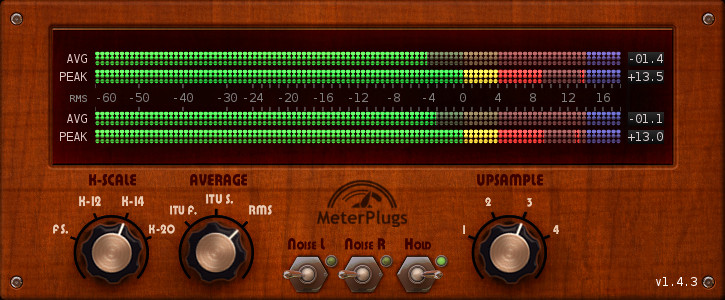
K-Meter
Mix and master like Bob Katz.
| Add to Cart |
Do not rely on trans individuals to educate you. Utilize resources from organizations like GLAAD, The Trevor Project, and the National Center for Transgender Equality.
The work continues. Every pronoun respected, every policy changed, every trans person supported in living authentically represents progress toward a world where gender diversity is celebrated rather than punished. That world remains distant, but the transgender community and their allies within LGBTQ+ culture continue building it, one conversation, one protest, one act of care at a time.
The transgender community consists of people whose gender identity—their internal sense of being a man, woman, non-binary, or another identity—differs from the sex they were assigned at birth. This community is incredibly diverse, encompassing trans men, trans women, and non-binary individuals whose gender expression may not follow traditional, binary norms. young shemale ass pics upd
To foster genuine allyship, individuals and organizations must move beyond passive acceptance. This involves actively supporting trans-led organizations, respecting personal pronouns, educating oneself on gender diversity, and advocating for policies that protect the safety, dignity, and healthcare rights of transgender individuals everywhere. By honoring its history and addressing its current challenges, society can move closer to a world where everyone can live authentically.
A person's internal, deeply felt sense of being male, female, or another gender. Do not rely on trans individuals to educate you
The transgender community and LGBTQ+ culture share deep historical roots, overlapping struggles, and mutual dependencies that cannot be untangled without doing violence to both. Trans people have always been part of queer movements, even when their contributions were erased or minimized. LGBTQ+ culture has provided spaces where gender non-conformity could be celebrated, even when those spaces remained imperfectly inclusive.
For many years, the "T" was the silent letter in LGBTQ. Activist organizations often dropped it, fearing that association with trans people would hurt gay marriage efforts. This strategy—known as "respectability politics"—argued that trans identities were too radical or too confusing for the public. Every pronoun respected, every policy changed, every trans
However, the relationship is not always harmonic. Historians point to the 1970s and 80s when some lesbian feminist groups, like factions of the Michigan Womyn's Music Festival, explicitly excluded trans women, coining the trans-exclusionary radical feminist (TERF) ideology. This schism caused deep wounds. In response, the broader LGBTQ culture has largely shifted to an inclusive stance, recognizing that trans women are women and trans men are men, and that solidarity is not optional—it is survival.
The transgender community and LGBTQ+ culture share an intertwined history shaped by resistance, celebration, and a continuous fight for human rights. While the broader LGBTQ+ acronym brings together diverse sexual orientations and gender identities, the transgender experience offers a unique perspective on gender presentation and bodily autonomy. Understanding this relationship requires exploring historical roots, modern cultural contributions, intersectional challenges, and the ongoing movement for global equality. The Historical Foundations of a Shared Movement
Originating in Harlem during the late 20th century, the Ballroom subculture was created by Black and Latino transgender and queer youth as a safe haven from racism and transphobia. This underground culture birthed "voguish" dance styles, unique runway categories, and linguistic terms—such as "spilling tea," "throwing shade," and "work"—that are now staples of everyday global vernacular. Shows like Pose and RuPaul’s Drag Race have brought these elements into the mainstream, showcasing the creative genius of trans pioneers. Media Representation
This paper avoids a simple celebration of diversity and instead offers a critical, dialectical analysis, making it interesting for readers familiar with LGBTQ issues and newcomers alike.
Did you know that audio levels can have an affect on external hardware and even plugins? Hardware (and some plugins) are designed for specific input levels - exceeding those levels can cause unwanted distortion and a loss of quality. James Wiltshire explains how K-Meter can be used to ensure proper levels.
I purchased your K-Meter beta, and I love it. I've tried every metering plug available, and I love yours the best. Great graphics, readability, ballistics, etc. All so well done. Thanks! Tom Third (tomthird.com)
This is the meter to use if you are serious about the K-System. It is accurate, easy to read, and contains tools for calibration. In addition, the interface is neat and collapses well if necessary. Dr. Heinrich Hohl
Just shouting out a big THANK YOU!!! for the K Meter plugin - I have been looking for a dedicated meter to use with logic without having to instigate 3 or more different plugins to monitor using the K -System. I have adopted the K system into my mixes for some time now and it vastly improves dynamics and clarity in digital land! I only hope the rest of the industry gets onboard! People would not be arguing ITB vs OTB Mixing if they all used your plugin! Timothy Kling (aka. Namatoke)


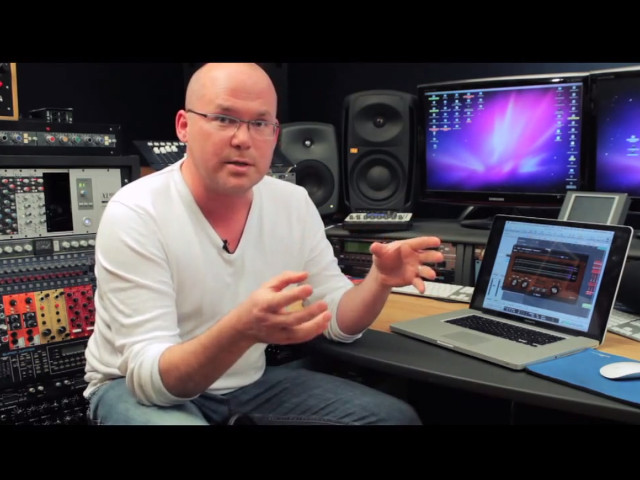 Watch "K-Metering Mixing Tips"
